
Apple has announced new iPhones and Apple Watches for 2023. They look nice. They always do. Apple by and large held prices at the same level. There are improved cameras in the iPhones. There’s Titanium on the Pro models. The Apple Watches get a new chip set, more memory and brighter screens. There’s a new 3 nanometer chip in the Pro iPhones and Apple is working hard to save the environment and tell you about saving lives.
And it all sorta, kinda feels obligatory.

Even coverage of the event and the devices feels a bit underwhelming. (Except for the derision being tossed around over Apple’s environmental efforts video featuring Octavia Spencer.) I’m betting the reviews will feel lackluster too. There’s a reason for that. Until at least “early next year” Apple’s vision for the Vision Pro and spatial computing is sucking up all the space, time and energy. What we’re seeing with this fall’s release of new iPhones and Apple Watches, and anything else that might come later, is merely marking time to keep the money machine churning until Apple flips the switch on its new paradigm.
Don’t get me wrong. The new iPhones and Apple Watches look like very nice devices. For those ready to upgrade or jump on the Apple bus for the first time I’m confident they will feel good about the devices they choose. We’re certainly not in any post-iPhone period. As I’ve said here and other places this is a mature product line and we’re seeing more iteration than innovation. It’s tough to make big splashes with iteration. And it seems like even Apple’s design folks responsible for colors are putting their focus elsewhere. For the most part, this is not going to change until after “early next year.” And maybe not even for awhile after.
But Apple did drop a few clues and if you’re paying attention it’s not hard to piece them together to suss out where things are headed.
We’ve become accustomed to the iPhone being the center of Apple’s universe. That will continue for quite some time to come. But in Apple’s universe the future belongs to spatial computing. No one knows when and exactly how that future will arrive, but Tim Cook is taking steps to make it possible. And we saw some of those steps and clues at this iPhone and Apple Watch event.
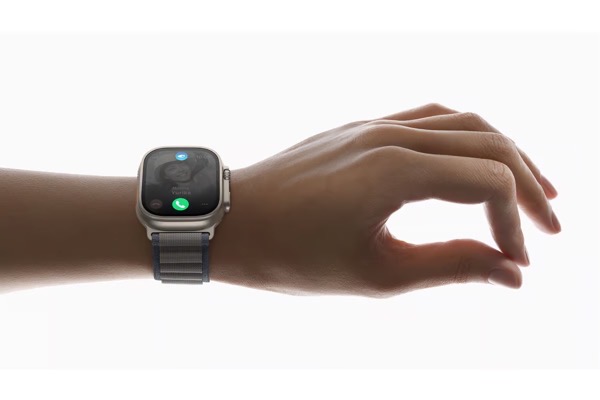
The first clue was lifting and refining the Double Tap gesture for the Apple Watch out of the Accessibiility options, where it has already been available, and making it a full-fledged feature of watchOS. The Double Tap got tent pole time at the event. And if you’ve been paying any attention at all to Vision Pro and spatial computing you immediately recognized that gesture from what Apple has revealed one of the ways users will interact in that new world.
Another big clue was the announcement that the new iPhone 15 Pro models will be able to record spatial video. That only makes sense. Spatial video from what everyone who has demoed the headsets says is pretty amazing to view in those devices. If Apple meets its target and releases Vision Pro devices “early next year” with spatial video as one of the signature features it doesn’t want to wait until next fall to have an iPhone that can record it. Yes, you can use the Vision Pro headset to record spatial video, but just about everyone agreed that poor dad at the birthday party looked pretty darned creepy.
 iCloud storage capacity levels are getting a bump up to 6TB and 12TB (at a price). I’m guessing those spatial videos will take up quite a bit of room.
Apple told us up front in the event that the focus would only be on new iPhones and Apple Watches. The pre-event rumor mill had pretty much quieted down talk about new iPads and Macs, much less anything about Apple TVs and other gear. So this annual fall event happened in essentially routine fashion. No big surprises, no “one more thing.”
There are folks that think we may see another event this fall regarding Macs and iPads. But I don’t think so. We’re not going to see new Macs until after we see the Vision Pro released. The reason I think that is one of the signature features of the Vision Pro and spatial computing: the ability to see and work spatially with the apps on your Mac.

I may be completely off base, but “early next year” sure seems like the perfect marketing one-two timing punch to sell newer Macs. I’m not sure how the iPad fits into that picture though. Which, as an iPad user is slightly concerning.
Spatial computing is the vision for the future. For better or worse Apple is taking us there. Until “early next year” things are going to feel a bit obligatory and routine when it comes to the current product lineup and maybe next year’s as well given that we probably aren’t going to see mass consumer take up of the Vision Pro in year one.
There’s nothing wrong with that. If Apple’s spatial computing bet on the future pays off then, at the moment, it feels like Tim Cook has timed this transition well. There are certainly enough iPhone users out there who will need and want to upgrade and there’s going to be a new iPhone every year going forward for quite awhile. But the vision is shifting and so too should our expectations.

 Life on the Wicked Stage: Act 3