Two nasty viewing pleasures came to an end this spring. Succession and The Great. Why do I call them “nasty?” Well, because they are both populated with nasty people doing nasty things to each other and everyone else with nary a glimpse of anything resembling a redeeming character that survives more than a few seconds in each.
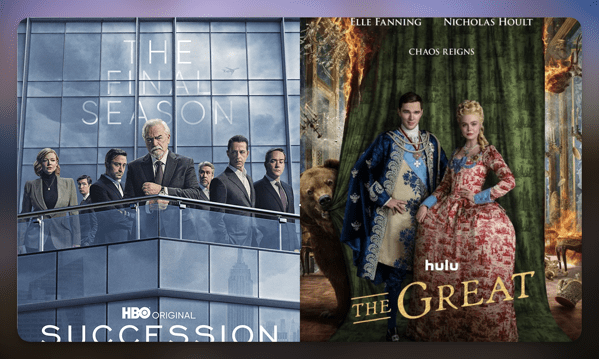
Both shows mix a milieu that features characters so above it all they can get away with all sorts of mischief including murder. Both shows slather on salaciousness to the point of impotence. Both stories feature folks who despise and disdain the masses so openly that it would embarrass Marie Antoinette.
And yet, both shows are deliciously and deliriously fun to watch and quite popular. Why is that? Do we just enjoy watching bad people behaving badly? Are we transferring our fantasies on to these characters? Are we deep down that sick, twisted, greedy and gluttonous? Is that the reflection we want to see in the mirror held up to our own nature?
The short answer is yes. Apparently.
I’m sure there are plenty of folks who don’t see the attraction in these characters and their shows. Even so there is something deep inside of many of us (enough of us?) that makes the villainy attractive and entertaining. Richard III is one of the greatest villains to ever parade around a stage. And he’s certainly entertaining. But like the Duke of Gloucester, villains usually get their comeuppance. Sometimes searching for a horse. Or in the case of Catherine, well…
Villains meet their end. Unless they’re primed for a series of sequels. And in the age of streaming series, I don’t think we want our villains to meet their end whether it be on a show or in real life.
Historically, there has always been a catharsis that purges our alliance and dalliance with the dark side when the house lights come up. We know that going in. There will be an end. The bad guys won’t win. In ancient entertainment the gods saw to that. These days, the show runners not so much. Our current moment is not serving comeuppance in the same way anymore.
The folks in Succession and The Great may have reached the end of their series, but there’s no real hint of their circumstances or the gods bringing them to heel. For the survivors there’s no suggestion of a change in their characters. The Roys are still richer than Croesus and Catherine is still empress of Russia. They and their respective courts will still bounce around behaving badly. They may all be living with the sting of regret from their choices and losses, but hey, nursing your wounds in palaces and island retreats sure beats having your head chopped off. Euripides would not be pleased. There’s no Butch and Sundance ending for these folks. The gluttony goes on.
And apparently we like our villainy viewing that way.
Oh sure, we love our heroes too. They may wear brightly colored costumes, but we underdress heroes in shades of gray tinted with flaws. So many (too many?) align with our real world heroes and villains because of their flaws not despite them. The more flawed they appear the greater the attraction. Substitute the word “human” for the word “flawed” in that last sentence and you can hold up that old mirror cliché and feel seen. Warts and all. It’s a fun house both on the screen and in real life. It makes me wonder why there’s such an interest in Alternate or Virtual Reality. We’ve already created it, and most of us actually have legs.
When it comes to the villains, the absence of consequences for those with money and power mocks anyone looking for the bad guys to get theirs in the end. It’s almost like you need to be a stupid villain to end up hoisted on your own petard. Currently we’ve cornered the market on celebrating stupid villains, misplacing craft and cunning with stupid and bumbling.
The lust for guile, guilt, and gluttony used to exist within some sort of security blanket wrapping us in that comforting myth that things would turn out in the end. Those bad guys weren’t like us. We couldn’t be that stupid or evil. Could we? Maybe we just wish we could.

 Life on the Wicked Stage: Act 3